

Lessons Learned from My (Unpublished) Books

Last week I got real about my publishing journey, and it resonated with many of you. The world of traditional publishing can feel so discouraging even when we’re not worrying about AI or imprints closing.
So today I want to focus on growing from failures. Because with each book, I’ve grown as a writer and learned more about the publishing landscape. This is the other joy I find in writing: that even my unsold projects can still teach me a lot about building a world and working with my agent.
Book One, Lesson One: How to write a novel
My first novel, the one that secured me my agent, was my baby. The one that taught me how to write a novel, the one I was so passionate about that I refused to let it go until I was basically forced to do so. (Maybe you can relate?) Based on the letters my great-great-grandmother wrote on her Grand Tour of Europe in 1890, this YA novel follows an aspiring painter in late 19th-century Cleveland as she struggles to break away from her Manx family and forge a path of her own.
I’d wanted to write a novel for as long as I could remember. Since middle school I’d written short stories, and in high school, I wrote a novella for a creative writing class. But college and grad school walloped me in a haze of academic stress, and it wasn’t until the summer after I got my teaching degree that I realized two things:
The only thing preventing me from writing a full novel was me.
If writing a novel felt overwhelming, I should approach it the way I knew how to write long history essays.
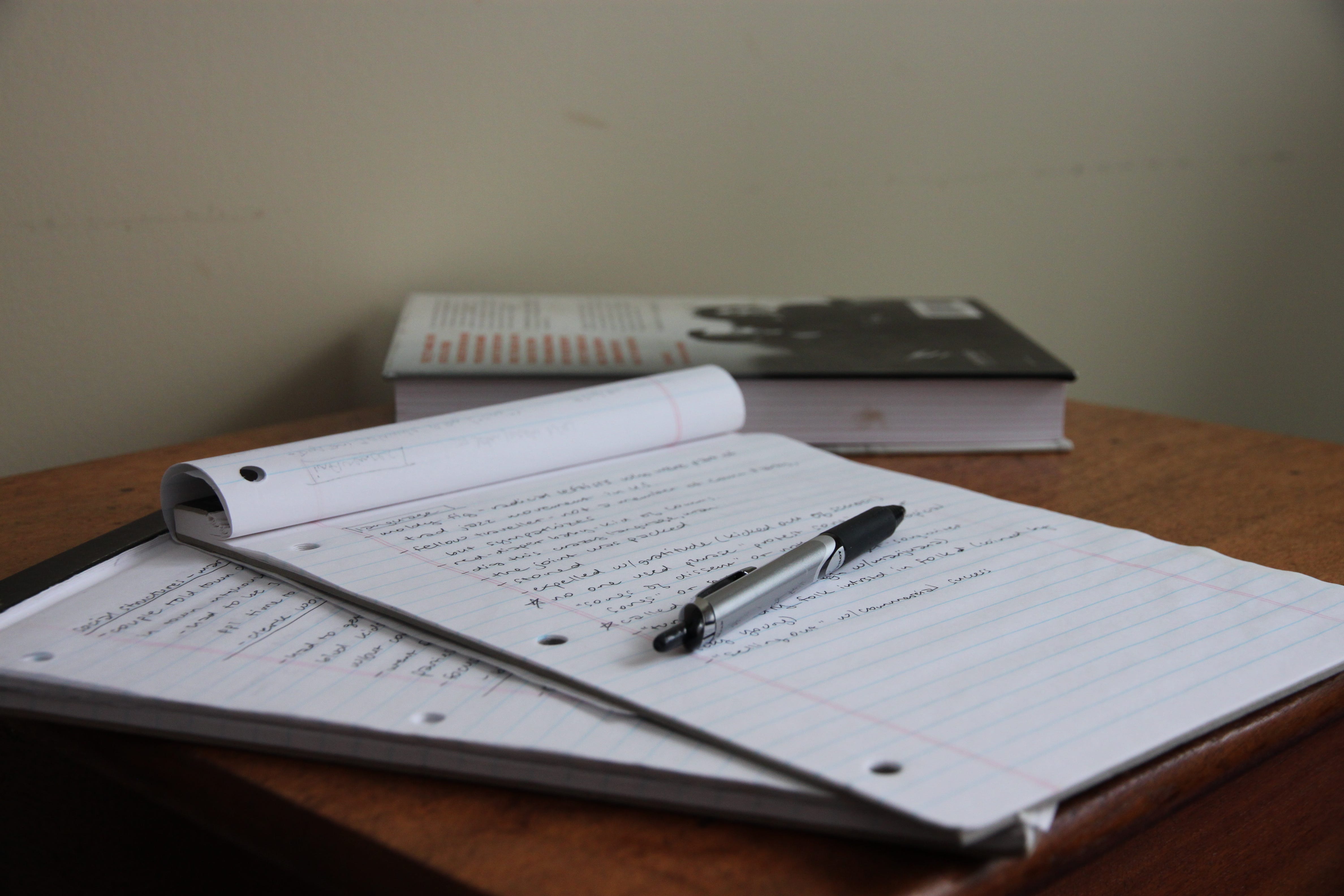
So that’s exactly what I did. It helped that I wanted to work on a historical novel; I checked out mountains of books, visited archives, and gloried in the research. I kept a separate notebook to log story and character ideas. I also read a ton of books on craft, like John Truby’s The Anatomy of Story and Writing Irresistible Kidlit by Mary Kole. I generated so many outlines following their suggestions that my eyes crossed. I went for long walks to work out character details in my head. Then, when I couldn’t put it off any longer, I started drafting.
But honestly, that was just the beginning. I kept stalling at the 25% mark, going back over the first few chapters to make them as strong as possible. Realizing I needed external help, I joined a local critique group through SCBWI, where I met incredible writers and illustrators (and three of us still meet once a month!). With their support, I finished a complete draft, then taught myself how to revise. After four long years, I felt ready to query agents.
Book One, Lesson Two: The book that gets you an agent may not be the book that sells
And here’s where the second big lesson comes in. I queried tons of agents and ultimately signed with Laura Crockett of Triada US. But as I mentioned last week, my dreams of hitting it big with a publishing deal did not come to pass.
This was a tough one. The first lesson this book taught me was one of hard work, perseverance, and continuing education. But this second lesson proved that those three things are not always enough. Just because an agent likes your book doesn’t mean an editor will buy it. We got a lot of feedback that the novel was too “quiet,” meaning that it lacked the high concepts and genre-blending hooks that were starting to sell. Ultimately publishing is a business, and an editor has to both fall in love with your book and be able to sell it.
After years of submitting and one round of R&R, we shelved this book.
Book Two, Lesson One: How to build a fantasy world
Luckily I had another idea in the works: a historical fantasy YA about girls who can generate electricity. (I’m still holding out hope for this one…) While I’d read plenty of fantasy and written at least one long fantasy story, I’d never approached it as an adult, with a focus on building a coherent world where the magic system holds together and deepens the theme and character arcs.
My husband, who loves Brandon Sanderson and what he calls “brick-a-books” (1,000-page fantasy epics), gave me a crash course in worldbuilding and magic system design. On long walks through Providence, we brainstormed and talked through ideas until I had a system that felt like a strong beginning. Through him I learned about Sanderson’s Laws, which are great starting points for designing a fantasy world if you’re new to this kind of writing.
The hardest—and, in my opinion, most important—part of building a fantasy world is determining how the magic impacts every aspect of life. If, say, your female characters can generate electricity, how does that affect access to power? Technology? Daily life? What opportunities do these characters have for education? How does it impact social structures? And so on. After several years (and learning how to be a parent!), I’d finished my second novel.
Book Two, Lesson Two: How to cut out a secondary character in revision
And, as excited as my agent and I were about this project, the publishing world was not. More regretful declines began to trickle in from editors. Midway through the submission process, COVID and Black Lives Matter hit, and in the subsequent upheaval and reckoning in the publishing world, I decided to pull my novel to cut out a major secondary character. This didn’t mean just deleting them and smoothing out scenes; getting rid of them affected everything. I had to rethink plot points like the inciting incident and climax, character development, and more. After a lot of hard work (while learning how to parent two kids, moving out of state, and starting a new teaching job…no big deal), I ended up with a revision I felt even better about.
And yet, despite editors’ enthusiastic responses, this was not to be, either. We reluctantly retired this project.
Book Three, Lesson One: Know your market
I was ready for something different. I fell in love with the romance genre when I returned to the classroom, and getting back in touch with a college friend who also writes romance inspired me to work on my own. I’d been toying with an idea vaguely based on my year in New York City fresh out of college, and I dove into imagining a romance that would challenge and push my main character. This book was fun and cathartic and a stretch, as I’d never written a novel for adults before. My agent knew I was working on this project and after a year of writing, revising, and working with beta readers, I eagerly sent it to her for feedback.
Which is where my next lesson comes in: I had sorely misjudged the romance market. I wasn’t the only one who’d fallen in love with it. Romance—contemporary and romantasy—was booming (still is!) and my project had to stand out from the crowd. A quiet (see a theme?) contemporary romance without a high-concept hook wasn’t likely to break out, and my agent also had reservations about the characters and their stakes. Her advice was, in short, devastating: either scrap the novel entirely, or develop it into a different project by bringing the subplot to the fore.
Book Four, Lesson One (so far): How to break a novel down for parts and build an entirely new one
Which is how I’ve found myself working on my fourth novel, learning my newest lesson. While I’d tried to write a contemporary novel that wouldn’t require much research, my inner history nerd wouldn’t stand for that, and I’d snuck in a subplot about a mysterious folk singer who’d disappeared in the 1960s. My agent suggested building that out more fully and turning the novel into a dual-timeline narrative, splitting the plots equally between the 1960s and the contemporary.
I sat with that idea for a bit to make sure I was truly excited about it. And the thing was, I could always envision the arc of my 1960s character. She had, in a way, always been more real to me than my contemporary character. (Should have been a sign…)
So I broke down my romance novel for parts. I scrapped one of the major settings, reviewed the backstory I’d developed for my 1960s character, did more research (woohoo!), pulled side characters that didn’t work and fleshed out those that did, and renamed my contemporary MC, among many other changes. It’s exciting and challenging, and I’m learning how to let go of my precious darlings in order to build something stronger.
What lessons have you learned from your shelved novels or earlier writing? I’d love to know!
Writing (Not) in the Kitchen Sink
Occasionally I publish work in other corners of the internet! This week I have a review of Seeking Persephone up on Willow and Thatch, a lovely site that reviews period dramas.